Jobzy (2020–2025): Multi-Product Platform
A suite of products across multiple subdomains: a public service marketplace, an Africa-focused recruitment & employee verification platform, a backend server integrating payments/AI/verification/search, and a mobile app for job seekers.
Overview
Jobzy is a company with two main products under one roof: Jobzy, a gig marketplace, and Talanta, an AI recruitment and verification platform. Enoch co-founded it at 16 in 2020 and served as CTO until 2025, building most of it himself (the mobile app was co-built with another engineer). From 2023 he rebuilt and scaled it into the multi-product platform it became by 2025. Along the way it won Startup of the Year at the 2023 East Africa Com Awards.
Product Screenshots
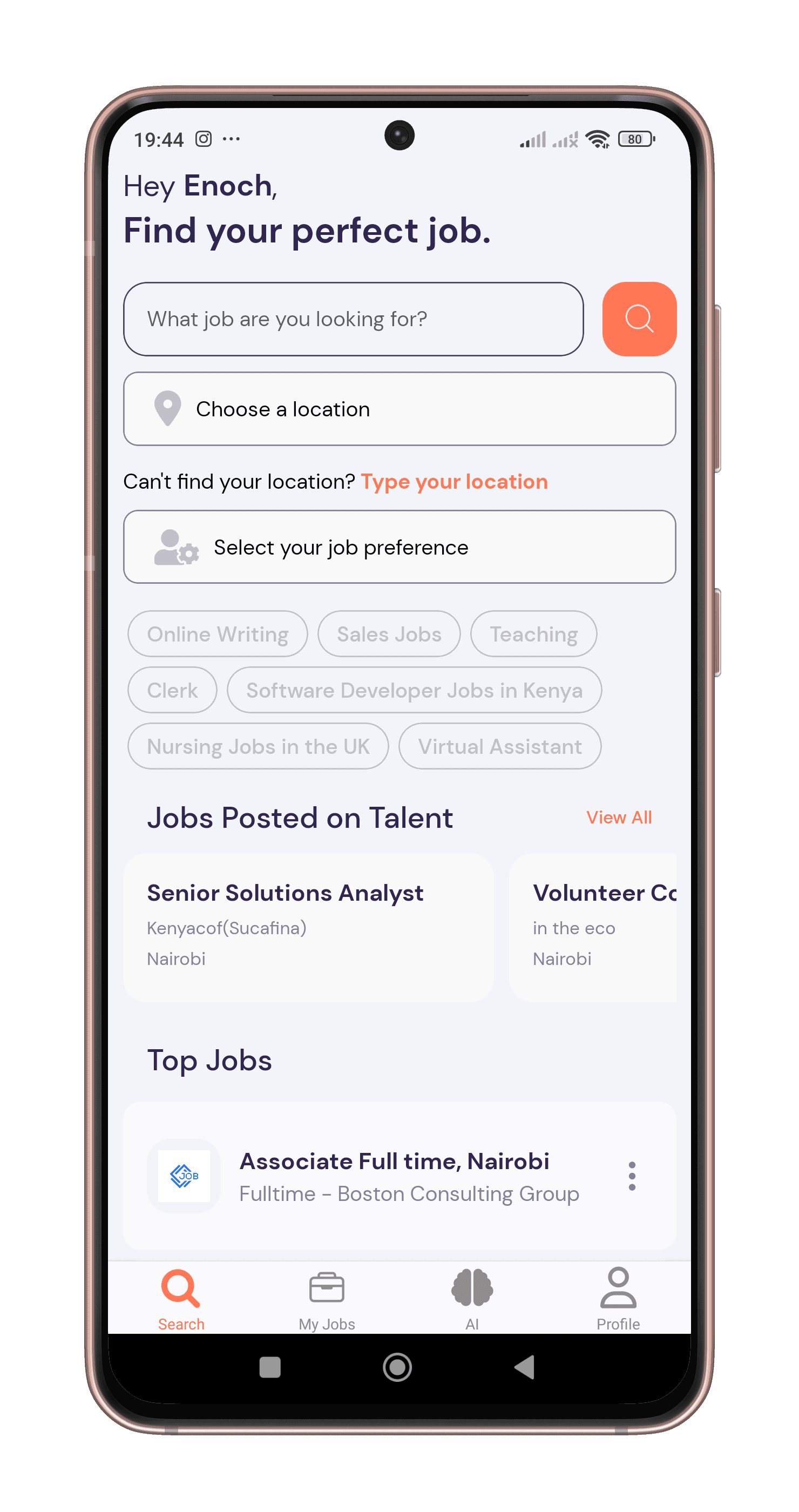
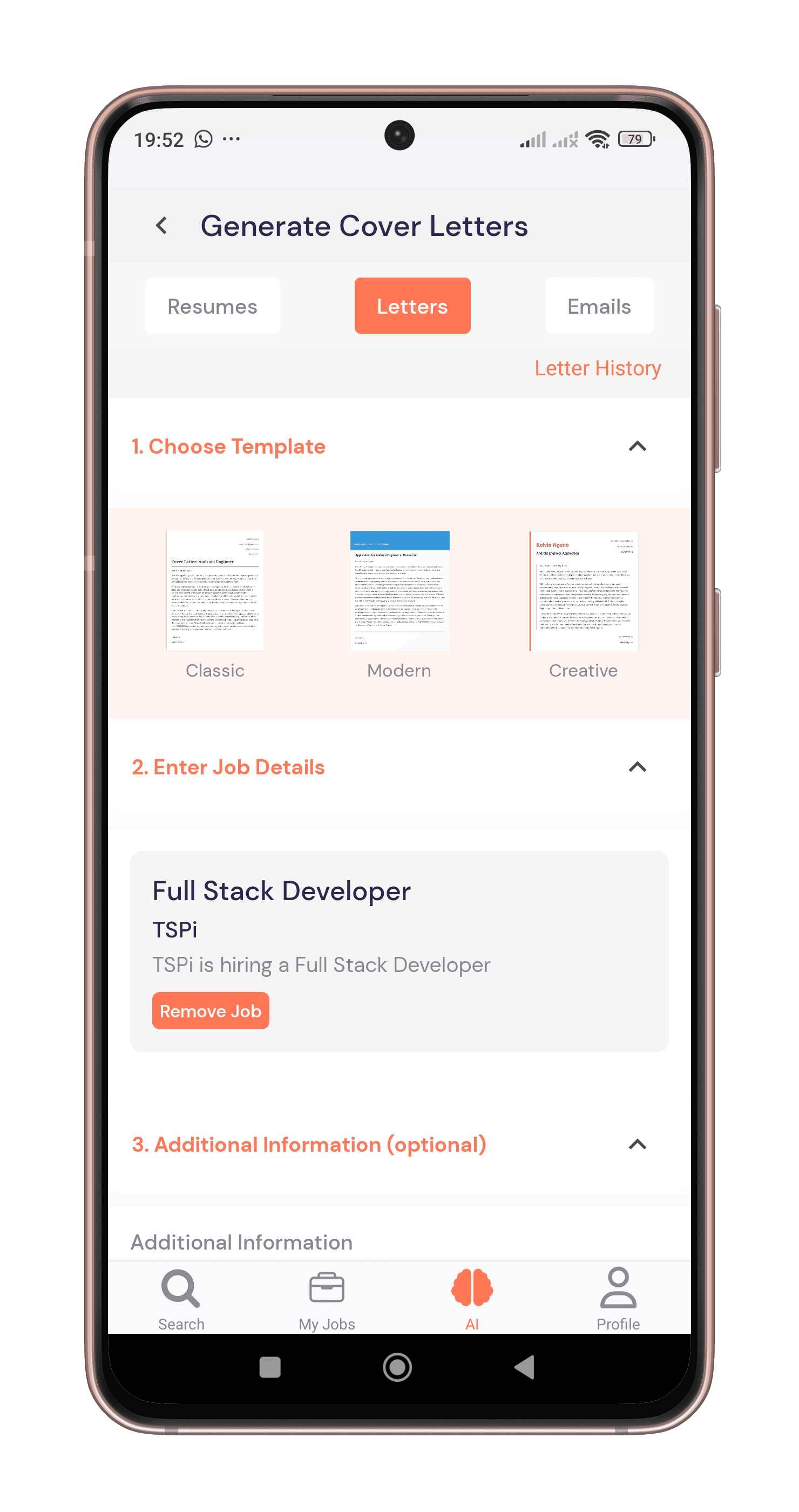
Products Built
Problem
Finding reliable, vetted service providers in many African markets is fragmented and trust-deficient.
Solution
A service marketplace connecting customers with providers (plumbers, electricians, cleaners, mechanics, etc.), with service discovery, search with autocomplete, and structured booking.
Stack
Architecture Notes
- Frontend application deployed on Vercel
- Search and autocomplete backed by Elasticsearch
- Structured booking flow for service requests
Problem
Hiring across African markets faces identity verification fragmentation, underdeveloped recruitment tooling, expensive/slow background checks, and complex cross-border hiring.
Solution
A unified recruitment and employee verification platform with job posting, multi-country identity verification, and subscription billing with dual payment methods (PayPal and M-Pesa).
Stack
Architecture Notes
- Multi-country employee verification covering several African markets
- Subscription billing with dual currency pricing (USD + KES)
- Quota-based access control with subscription upsells
Talanta Server: Backend
Problem
The Jobzy/Talanta product ecosystem required a shared backend integrating identity verification, AI generation, search, payments, and background processing.
Solution
A Node.js/TypeScript backend powering the entire Jobzy/Talanta ecosystem with endpoints for marketplace, recruitment, verification, AI generation, and billing.
Stack
Architecture Notes
- Unified backend serving multiple frontend products
- AI content generation for resumes, cover letters, and application materials
- Search infrastructure supporting both keyword and semantic matching
- Background job processing for subscription lifecycle management
Problem
Mobile-first job seekers need unified job discovery, AI application tools, and application tracking in a single cross-platform app.
Solution
Cross-platform app (iOS/Android/Web) with job aggregation, AI-powered application tools, and application pipeline tracking. Co-built with another engineer.
Stack
Architecture Notes
- Cross-platform deployment across iOS, Android, and web
- Job aggregation from multiple sources
- AI-powered tools for resume, cover letter, and application email generation
- Application pipeline tracking from saved through to offer stage
Technical Highlights
- Multi-product ecosystem across multiple subdomains with a shared backend
- Service marketplace with Elasticsearch search and autocomplete
- Recruitment + verification across 5 countries with dual payments (PayPal webhooks + M-Pesa STK Push)
- Azure Service Bus event-driven workers for account lifecycle, subscription renewals, and expiry sweeps
- Elasticsearch talent-pool index powering AI candidate matching
- Productized API access with per-key request metering and quotas
- AI content suite (cover letters, resumes, application emails) on gpt-4o-mini
Key Design Decisions
- Owned architecture, infrastructure, and most product engineering as co-founder and CTO from 2020 to 2025 (the mobile app was co-built with another engineer)
- Chose a multi-subdomain architecture. Each product has distinct user bases and deployment requirements
- Dual payment methods (PayPal + M-Pesa) to support both international and local African payment workflows
- Search infrastructure combining keyword and semantic matching for different product needs
- Per-country verification modules to handle varying regulatory requirements across African markets
Tradeoffs
- Splitting products across subdomains meant more to deploy and monitor. In return, each one could move at its own pace without waiting on the others.
- Running Elasticsearch was real operational weight for a small team. It earned it, powering marketplace search and candidate matching from a single place.
- Two payment integrations instead of one doubled the surface area. In our markets, card-only would have meant most users simply couldn't pay.
Outcome
Co-founded at 16 on about $15, and operated for five years (2020–2025) across four subdomains serving providers, recruiters, and job seekers in African markets. Jobzy passed 20,000 engagements and won Startup of the Year at the 2023 East Africa Com Awards. Dual payments (PayPal + M-Pesa) and multi-country verification made cross-border hiring possible where neither existed as a product.
Lessons Learned
- A shared backend with per-product access control aged far better than the separate backends I first considered. The boundaries have to stay strict, though, or 'shared' quietly becomes 'tangled'.
- Mobile money isn't a nice-to-have in the markets we served. Build for M-Pesa and card from day one, or don't really bother.
- Every country had its own verification rules. Going modular from the start was the only thing that kept that from turning into a rewrite per market.